SHARE
AI Won't Ruin Your SEO... But Generic Content Might
Scaremongering at its best
If you’ve been scrolling through LinkedIn and other social media channels recently, there’s a good chance you’ve seen posts relating to a ban on AI content and scare stories relating to Google penalties.
Headlines doing the rounds are content such as: “AI websites are being de-indexed” and “Google is banning AI content”. And now you’re wondering if you’ve made a grave mistake embracing AI.
Please be assured, the reality is considerably less dramatic.
Google isn’t banning the use of AI. What it continues to warn against is publishing large amounts of low-value, unoriginal content created to manipulate search rankings. That’s the distinction that really matters.
So before you start panicking and rewriting your website content, let’s look at what this really means for businesses in 2026.
Does Google Now Penalise AI Content?
No, not simply because it was created using AI.
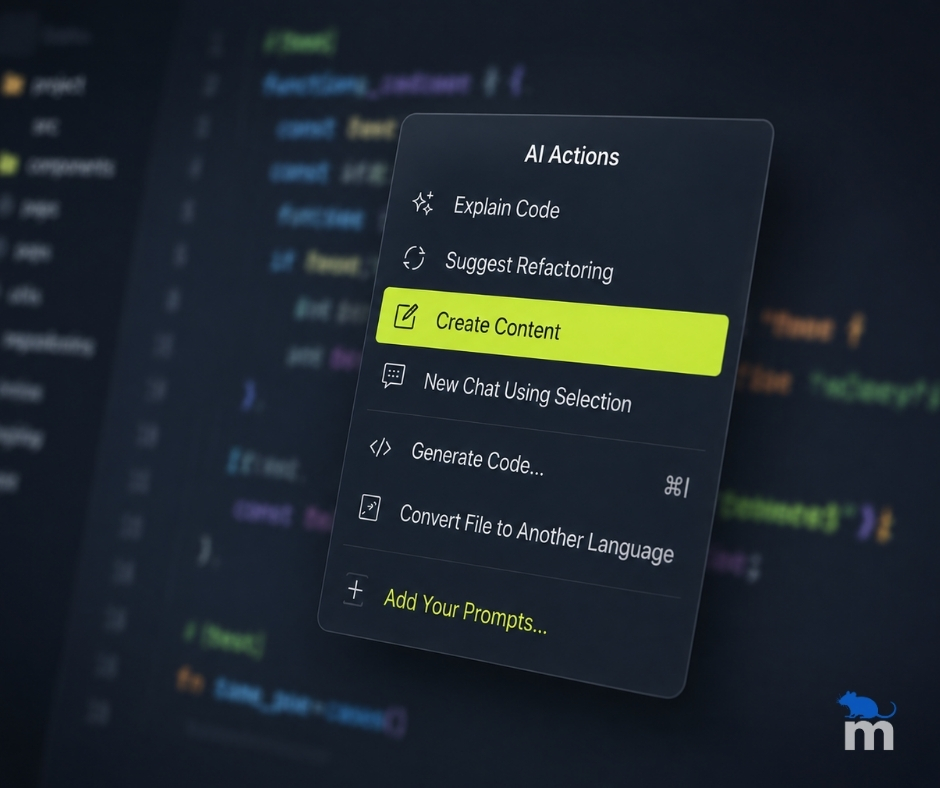
The stance on this is Google says appropriate use of AI and automation isn’t against its guidelines. What can breach its spam policies is using automation, including AI to create content at scale primarily to manipulate rankings.
So AI generation isn’t the issue. It’s how it’s being used.
Can Google Tell When You've Used AI?
You may have heard about ‘AI watermarks’. Unlike a traditional watermark, where a visible mark is added to a document or image, some AI systems can embed signals into generated content that are imperceptible to us but can be detected using specialist technology.
Google’s SynthID, for example, can watermark AI-generated text, images, audio and video produced through supported Google AI systems.
But to make it clear… using tools to identify AI generated content is not the same as penalising it.
So What Classifies as Generic Content?
Love it, or hate it, AI has made it incredibly easy to generate content that can be used across socials and websites. By providing a basic prompt, you can generate a respectable 1,000 word article within seconds.
The problem with this? So can everyone else! That’s both a strength and weakness to using AI to generate content.
Generic content doesn’t necessarily result in a Google penalty. But content that offers little additional value may struggle to rank well, lose visibility or not be considered valuable enough to index.
Examples of where generic content can start becoming generic or offer little additional value:
- Articles that repeat information already available everywhere else.
- Endless blogs and articles created because someone thinks they need to post purely for SEO
- Location pages where essentially nothing changes except the town name
- Generic advice with no experience, opinion or examples behind it
- Huge volumes of content created simply to target keywords and SEO
If we take location pages as an example, the days of cloning multiple pages and simply replacing a town name are an approach I’d be cautious about. If those pages add little unique value and exist purely to capture search terms, they are exactly the sort of approach Google’s current guidelines tells website owners to rethink. This is a practice I have seen time and time again, and have even witnessed where authors have mistakenly left old town names in!
Does Google Actually Care if Content is Generated by a Human or AI?
Not really is the short answer.
Google’s core ranking systems are designed to prioritise helpful, reliable, people-first content. The fact that AI has been used isn’t, in itself, what determines whether that content performs well in search.
What matters is whether the finished content offers something worthwhile.
That might come from your own statistics or research, first-hand experience, original photos and videos, genuine expertise, or a perspective that adds something new.
Let’s take a straightforward example, imagine I own an Accountancy Firm and I produce a generic article like ‘Top Tips for Choosing an Accountant ’. Anyone can quickly generate this content whether using AI or not. And anyone with a web browser can quickly find multiple web pages featuring these exact tips.
Now if I write an article based on a real-life experience, such as ‘How I Helped a Sole Trader Prepare for Making Tax Digital’ and detailed a case study about how I helped them transition from a spreadsheet system to a digital platform and the outcome, that’s unique content that serves to help people and demonstrates expertise and evidence.
And this is where Google’s new ‘non-commodity content‘ language gives you a real advantage. Google explicitly says high quantities of pages don’t make a website higher quality and warns against creating separate content for every possible search variation primarily for rankings.
Human-Written Doesn't Automatically Mean Higher Ranking Either
Albeit it takes a lot longer, but we can all write 1,500 words of generic waffle from scratch without a sniff of AI in the mix. But let’s not confuse or miss the point as this is not about humans Vs AI.
Google’s longstanding position isn’t simply about how the content was produced; helpfulness, originality and purpose are far more important considerations. Bad content existed long before AI, and the latter has just made it much easier to produce at a quicker rate!
Used correctly, AI can help someone with genuine expertise turn their knowledge into an excellent article.
So Should You Stop Using AI for Website Content?
Absolutely not!
It’s a personal choice of course, but AI is an incredible tool that can be used to help with your content creation process.
Used correctly, it can help with research, ideas, structure and turning your expertise into something that genuinely helps people. But it still requires something that AI will never be able to create for you: your knowledge of your business, your customers and your real-world experience.
My Top Tip for Creating Content in 2026
Before you hit publish on your next article, ask yourself…
“What does this article or page add that someone can’t get from viewing multiple other pages already talking about the same subject?”
If your honest answer is “Not Much”, pause before publishing and think about where you can add unique value that will genuinely help someone looking for information on your topic.
AI Isn't Going Anywhere. Neither Is Good Marketing.
AI is changing how we create content, and it’s changing how people search. But the marketing foundations haven’t changed.
Understand who you’re talking to. Have something worthwhile to say, and create content for a reason.
AI isn’t something businesses need to fear. Generic, forgettable content is the bigger risk.
And in case you’re wondering… yes, I absolutely used AI to help create this article! Not to manipulate rankings or drive SEO, but as a tool to help research, challenge my thinking and to genuinely help clients understand what Google’s current guidance actually means for content creation in 2026.
And if nothing else, I hope this article goes in some way to remove some of the fear generated by scaremongering tactics I’ve seen across social platforms in recent weeks!

I’m Sarah Jane, founder of Mouse Blue Creative. I help small business owners create marketing-led websites that bring clarity, visibility and growth. By combining strategy, messaging and website design, I help businesses create websites that not only look professional but support their long-term business goals too.
It’s not just about pages and pixels. It’s about setting your website up with the right strategy from day one.
📩 If you’re ready to make your website work harder for your business, book a free 30-minute discovery call or drop me a message. I’d love to hear your story.
MORE POSTS